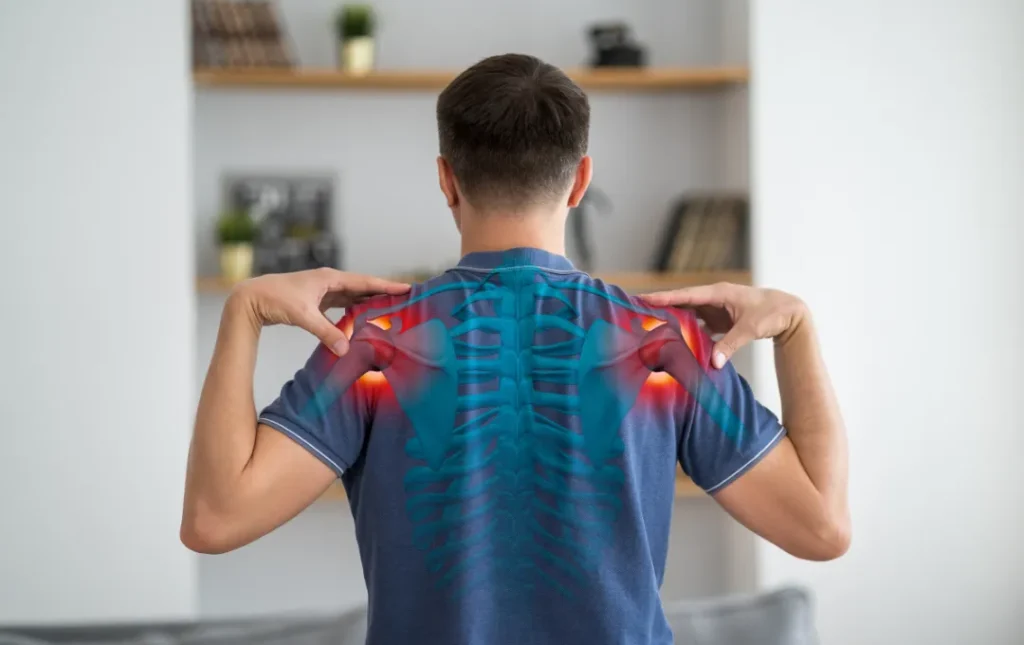
Frozen Shoulder Physiotherapy in Mississauga
Frozen shoulder doesn’t just limit your arm. It disrupts sleep, daily function, and the activities that define your life. At Rejoice Physiocare, our stage-aware physiotherapy approach works with your body’s natural recovery process. We draw on clinical experience addressing adhesive capsulitis to gradually help restore movement and ease the discomfort holding you back.
Book a Frozen Shoulder assessment →
Book your shoulder assessment today and take the first step toward reclaiming your range of motion.
Is This Your Shoulder?
If you have been diagnosed with adhesive capsulitis, or suspect your shoulder is progressively locking up, you are in the right place. This page is intended for those who already understand frozen shoulder and are deciding whether targeted physiotherapy is the appropriate path forward in Mississauga.
These are the functional signs that typically bring patients through our door:
- Severe, unpredictable shoulder pain that consistently wakes you at night when you roll onto the affected side.
- Inability to reach behind your back: fastening a bra clasp, reaching for a seatbelt, or retrieving a wallet has become genuinely difficult.
- Raising your arm overhead to wash your hair or reach a high shelf causes sharp, catching discomfort.
- A progressive, deepening stiffness that resting and cold winter weather seem to aggravate rather than resolve.
How Does Physiotherapy Help With A Frozen Shoulder?
Frozen shoulder moves through three recognized stages (freezing, frozen, and thawing), and what your shoulder needs from physical treatment changes meaningfully at each one. Physiotherapy helps by adapting to this physical progression, employing a measured, stage-specific approach that works alongside your body’s tissue remodeling cycle rather than forcing sudden change on a restricted joint.
During the acutely painful freezing stage, clinical focus shifts toward gentle joint mobilization, working to reduce local inflammation and preserve baseline movement without provoking unnecessary flare-ups. As the shoulder enters the frozen and early thawing phases, treatment advances to targeted manual therapy designed to help stretch the contracted joint capsule, the dense, fibrous connective tissue whose tightening is at the root of your restriction. Progressive range-of-motion exercises are introduced in step with what the capsule can safely tolerate.
What distinguishes this approach from treating the shoulder in isolation is the recognition that restricted mobility rarely happens alone. Compensatory tension rapidly accumulates in the cervical spine, thoracic region, and scapular muscles as the body guards the painful point. Physiotherapy for frozen shoulder at Rejoice Physiocare addresses this whole kinetic chain, helping release secondary tension, restoring postural balance, and supporting functional recovery.
Book a Frozen Shoulder assessment →
What Should You Expect From Frozen Shoulder Treatment?
Understanding the clinical process before your initial visit helps you approach physiotherapy as a committed participant rather than a passive recipient, which, for adhesive capsulitis, can meaningfully influence outcomes.
| Stage | What Happens | Focus |
| Initial Assessment | A hands-on, comprehensive evaluation of your shoulder’s functional range. Your physiotherapist assesses the cervical spine, thoracic posture, and upper back to map how surrounding structures compensate. This helps identify which phase of frozen shoulder you may be experiencing. | Accurate clinical staging and baseline mapping of complete kinetic chain restrictions. |
| Treatment Sessions | Stage-dependent interventions, typically beginning with an initial frequency of 4 to 8 sessions. In painful early stages, sessions emphasize relief. As the shoulder thaws, evidence-informed manual therapy and progressive capsular stretching are introduced alongside guided strengthening. | Gradual, tolerable progression: safely working to increase local mobility without forcing movement beyond your tissue’s natural threshold. |
| Timeline | Adhesive capsulitis is inherently slow to resolve. Consistent physical therapy generally spans 6 to 12 months of active care, aiming to support a natural recovery process that commonly takes 1 to 3 years overall. | Setting honest expectations; working toward measurable functional progress markers rather than vague clinical promises. |
How Do Frozen Shoulder Treatment Options Compare?
Many patients exploring physiotherapy have already considered other clinical interventions. Understanding where each approach fits in the continuum of care allows you to make an informed, confident decision.
| Treatment | What It Offers | Important Context |
| Physiotherapy | Stage-adapted manual therapy, progressive capsular tissue mobilization, and guided exercise conditioning targeting the full kinetic chain. | A commonly recommended primary care route; addresses mobility restriction and underlying mechanics rather than only easing symptoms. |
| Corticosteroid Injection | Can provide meaningful short-term inflammatory pain relief during the aggressively painful early freezing stage. | Does not actively restore joint mobility; physiotherapy is often used concurrently to make use of the reduced-pain window. |
| Surgery / MUA | Capsular release or manipulation under anesthesia aims to release the tissue restriction mechanically. | Typically considered a last-resort option for severe cases, and generally requires substantial post-operative physiotherapy to help reduce the chance of re-freezing. |
| Watchful Waiting | Adhesive capsulitis does possess an innate life cycle and can resolve on its own over time. | Passive waiting may prolong stiffness for an extended period and can allow painful secondary shoulder compensations to develop. |
Physiotherapy At Rejoice Physiocare
If you are considering targeted physiotherapy as your path forward for frozen shoulder, the quality and consistency of the clinical care behind your treatment plan matters most. At Rejoice Physiocare in Mississauga, our physiotherapy practice is built on the understanding that the human body operates as a fully interconnected mechanical system. Meaningful recovery from a complex condition like adhesive capsulitis involves addressing not just the shoulder capsule, but the compensatory postural patterns that have developed around it.
To learn more about how our licensed practitioners approach hands-on, evidence-informed physical therapy, visit our physiotherapy service at Rejoice Physiocare.
Why Choose Rejoice Physiocare For Your Frozen Shoulder Recovery?
Addressing a frozen shoulder effectively requires far more than a generalized shoulder exercise handout. It requires an in-depth understanding of the condition’s distinct stages and how treatment must adapt as your shoulder progresses through them.
Stage-Aware Clinical Approach
Our team applies precise treatment strategies specific to whether your shoulder is actively freezing, frozen, or thawing, continually adapting the plan as your condition evolves.
Whole-Kinetic-Chain Thinking
We thoroughly assess and work to address compensatory tension in the cervical spine, thoracic region, and scapula, avoiding the limitations of isolated point treatment.
Transparent, Honest Timelines
We communicate realistic therapeutic recovery ranges clearly, so you can plan your life appropriately and approach each session with well-founded expectations.
Evidence-Informed Manual Therapy
Treatment integrates targeted joint mobilization and progressive mechanical loading supported by current medical literature for adhesive capsulitis management.
Patient Experiences
Hearing from nearby Mississauga residents who have navigated a frozen shoulder (the disrupted sleep, the day-to-day functional frustrations, and the gradual return of movement) can be profoundly reassuring when you are at the beginning of your own recovery. Below is what local patients share about their physiotherapy journey at Rejoice Physiocare.
Frequently Asked Questions About Frozen Shoulder Physiotherapy
These are the questions we hear most frequently from patients deciding whether physical therapy is the right path for their frozen shoulder.
How Many Physiotherapy Sessions Will I Need For A Frozen Shoulder?
The number of sessions required varies based on your current condition stage and how your shoulder responds to treatment. Most patients complete an active treatment program spanning 6 to 12 months, initially attending 1 to 2 sessions weekly. Your physiotherapist sets progressive milestones rather than a fixed end date, continually adjusting care as mobility improves.
Should I Get A Cortisone Injection Before Starting Physiotherapy?
Cortisone injections can provide short-term pain relief, particularly during the acutely painful freezing stage of adhesive capsulitis. However, injections do not actively restore joint mobility on their own. Medical guidelines often suggest combining an injection with active physiotherapy, making use of the temporary reduction in pain to safely introduce progressive capsular mobilization work.
How Does Physiotherapy Compare To Surgery For Frozen Shoulder?
Physiotherapy is commonly considered a first-line, non-invasive approach for frozen shoulder, gradually addressing capsular restriction through manual therapy and exercise. Surgery, such as manipulation under anesthesia, is generally reserved for chronic cases that have not responded to conservative care. Regardless of surgical intervention, robust post-operative physiotherapy is typically important for restoring functional movement and strength.
Can I Continue Working And Exercising During My Shoulder Treatment?
Many patients comfortably continue modified work and exercise routines throughout their frozen shoulder recovery. You will typically need to limit overhead reaching and heavy lifting to avoid joint flare-ups during active treatment phases. Your physiotherapist can help design a functional movement plan that keeps you active without placing undue strain on the affected shoulder capsule.
What Is The Difference Between A Frozen Shoulder And A Rotator Cuff Tear?
A frozen shoulder generally causes progressive restriction across all movement directions due to tightening of the joint capsule. A rotator cuff tear more often presents as localized weakness and sharp discomfort during specific movements rather than global restriction. An in-person clinical assessment can help evaluate your mobility and inform an appropriate conversation with your healthcare provider about these distinct shoulder conditions.
Do I Need A Doctor’s Referral For Shoulder Physiotherapy?
No, you do not typically need a doctor’s referral to begin a physiotherapy assessment or treatment plan at Rejoice Physiocare. However, if you plan to use extended health insurance benefits to help cover your care, we recommend checking whether your specific provider requires a physician’s note for reimbursement purposes before scheduling your first appointment.
Insurance Coverage For Frozen Shoulder Physiotherapy
Physiotherapy for conditions like frozen shoulder is often covered under extended health benefit plans, a common provision for employees across the Mississauga area. We offer direct billing to many insurance providers, so in most cases you do not need to pay the full amount up front. If your plan is not eligible, we provide detailed, compliant receipts after every appointment so you can submit them to your insurer yourself. If you are uncertain about your available physiotherapy limits or specific coverage terms, we recommend consulting your benefits administrator prior to scheduling.
Serving Mississauga And Surrounding Communities
Rejoice Physiocare is proudly based in Mississauga, Ontario, providing dedicated frozen shoulder physiotherapy for residents navigating mobility restrictions. Our accessible clinic frequently serves patients traveling from neighboring Peel Region communities, including Streetsville, Port Credit, Erin Mills, Meadowvale, and Cooksville. We structure care schedules to help ensure your ongoing appointments remain practical and consistent throughout your multi-month recovery journey.
Ready To Start Your Frozen Shoulder Recovery?
You do not have to passively wait for your shoulder to resolve on its own over years. A professional physiotherapy assessment at Rejoice Physiocare helps establish where your shoulder is in its natural cycle, providing a clear, structured treatment plan to support your recovery.
Book your shoulder assessment today. Call our clinic at [CLIENT TO PROVIDE] or schedule online at [CLIENT TO PROVIDE].
Sources and further reading
General health information from independent public and professional sources. It does not replace an assessment with a registered clinician.
- Frozen shoulder, NHS
- Frozen Shoulder, Physiopedia




