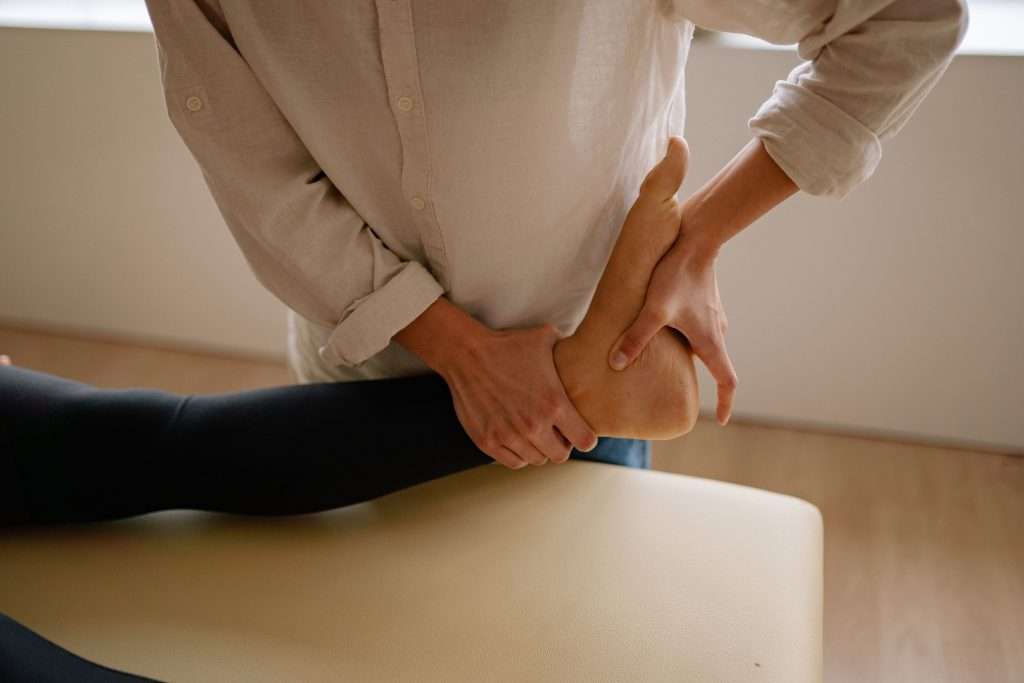
That stabbing sensation in your heel when you take those first steps each morning is not something you simply need to endure. At Rejoice Physiocare, our heel spur physiotherapy in Mississauga focuses on identifying and helping address the underlying mechanical imbalances that may be contributing to your foot discomfort. Rather than managing isolated symptoms, we work to support the inflamed connective tissues associated with your condition so you can move through your day with greater confidence.
Book your initial assessment today and take the first step toward supporting your foot health.
Recognizing Heel Spur Symptoms
Heel spurs can affect individuals in different ways, yet the experience tends to follow a recognizable pattern. If any of these situations resonate with your daily life, exploring heel spur physiotherapy in Mississauga may be a meaningful next step for you.
These are the functional signs that typically bring patients through our door:
- A sharp, knife-like pain at the base of your heel during those first few steps out of bed each morning - a discomfort that makes you hesitant to put your full weight down.
- Heel pain that eases briefly with movement but returns with force after prolonged periods of standing, sitting at a desk, or walking.
- Difficulty walking barefoot on hard indoor floors - such as tile or hardwood - without unconsciously shifting your weight or altering your natural gait pattern.
- A sense that physical rest and over-the-counter insoles have offered only temporary relief, leaving the deeper mechanical factors that may be driving your discomfort unaddressed.
How Does Physiotherapy Help With Heel Spurs?
A heel spur describes a calcium deposit that forms on the heel bone. However, the discomfort most individuals experience does not originate from the bony structure itself. Rather, it stems from the inflamed connective tissues - particularly the plantar fascia - that attach in the surrounding area. Physiotherapy for heel spurs works to identify and help address the biomechanical imbalances that may be sustaining this mechanical overload, rather than focusing solely on suppressing local symptoms.
A physiotherapist evaluates your entire kinetic chain - foot mechanics, calf flexibility, gait pattern, and overall postural alignment - to build a clear clinical picture of your presentation. Treatment typically follows a multi-layered path: targeted stretching and progressive strengthening work to restore balance to the calf complex; manual therapy helps release tight connective tissue; and where clinically appropriate, advanced modalities such as shockwave therapy may be integrated to support the body’s natural healing response at a deeper level.
This evidence-informed approach reflects a foundational clinical principle: foot mechanics do not operate in isolation. When the arch is under-supported or gait compensation patterns take hold, consequences can cascade through the knee, hip, and lower back. Physiotherapy works to help restore the foundational mechanical equilibrium your whole body depends upon.
What Should You Expect From Heel Spur Treatment?
Understanding what the treatment process involves helps set realistic expectations for your recovery journey. Below is a breakdown of our clinical approach to heel spur care at Rejoice Physiocare.
| Stage | What Happens | Typical Duration |
| Initial Assessment | Your physiotherapist performs a comprehensive evaluation of your foot mechanics, gait, posture, and systemic alignment. This clinical examination explores how movement patterns across your kinetic chain may be contributing to mechanical overload at the heel, providing a clear functional picture of your individual presentation. | One session (approximately 45-60 minutes) |
| Treatment Sessions | Each session combines hands-on manual therapy to help release connective tissue tension with guided strengthening movements for the foot and calf. Where clinically appropriate, complementary modalities such as shockwave or laser therapy may be incorporated to support deeper tissue recovery. | Typically 30-45 minutes per session |
| Recovery Timeline | Many individuals report a reduction in morning heel stiffness within 3 to 6 sessions. More comprehensive functional restoration and improved mechanical balance generally develop over a longer period of consistent, engaged care. | 6-12 weeks for comprehensive recovery |
Is Physiotherapy Or Surgery Right For Heel Spurs?
Many individuals exploring care for heel spur pain consider several medical pathways before committing to one approach. Each option has a distinct clinical role, and the most appropriate choice depends on your specific goals, medical history, and the severity of your condition.
| Option | How It Works | What to Consider |
| Physiotherapy | Aims to address the biomechanical imbalances and soft-tissue factors associated with the pain. Active, personalized, and systemic - considering the entire kinetic chain from foot to lower back. | Requires consistent engagement over several weeks; a less invasive option that many individuals consider as a first pathway. |
| Cortisone Injection | Aims to suppress local inflammation, often producing rapid short-term relief at the site of pain. | May not address the movement patterns or tissue factors contributing to mechanical stress; for some individuals relief may be temporary. |
| OTC Insoles / Rest | Provides passive load redistribution or a brief reduction in physical activity to allow initial settling of symptoms. | Passive interventions that do not strengthen supporting structures; may offer limited long-term effect for many individuals. |
| Surgery | Addresses the bony spur structurally in highly refractory, severe cases where other approaches have not achieved adequate relief. | Generally considered after conservative rehabilitation options have been thoroughly explored; carries inherent recovery demands and risks. |
Physiotherapy and complementary treatments are not mutually exclusive. Many practitioners integrate them within the same rehabilitative program to support a more comprehensive recovery outcome.
Physiotherapy At Rejoice Physiocare
If you are considering physiotherapy as your pathway forward for heel spur pain, understanding how our clinic approaches this work is a natural next step. At Rejoice Physiocare, our physiotherapy philosophy is grounded in the clinical understanding that the body functions as an interconnected whole. A mechanical imbalance in the foot has the potential to cascade through the structures above it, meaning meaningful recovery often depends on supporting systemic balance - not simply attending to an isolated site of discomfort.
To learn more about how our licensed practitioners approach hands-on, evidence-informed physical therapy, visit our physiotherapy service at Rejoice Physiocare.
Why Patients In Mississauga Choose Rejoice Physiocare
Managing heel spur pain effectively requires more than a generic exercise handout. It calls for a thorough clinical understanding of how foot mechanics interact with the broader kinetic chain - and a team committed to providing individualized care.
Thorough Biomechanical Assessments
Our team evaluates complex plantar fasciopathy and heel spur presentations by looking beyond the heel to your full postural picture, helping us understand the complete mechanical context of your pain.
Evidence-Informed, Systemic Protocols
We follow precise load management and kinetic chain restoration principles grounded in current rehabilitation science, ensuring your treatment plan reflects a rigorous clinical foundation.
Integrated Complementary Modalities
Where clinically appropriate, we incorporate evidence-based shockwave and laser therapy alongside manual and exercise-based care to help support connective tissue recovery at a deeper level.
A Philosophy of Active Partnership
We position every individual as an informed participant in their recovery, equipping you with sustainable movement strategies designed to help maintain foot health long after your formal clinic sessions conclude.
Frequently Asked Questions About Heel Spur Physiotherapy
These are the questions we hear most frequently from patients deciding whether physical therapy is the right path for their heel spur discomfort.
How Long Does It Take For Physiotherapy To Help With A Heel Spur?
Initial reductions in symptom intensity are typically reported within 3 to 6 sessions for many individuals. Comprehensive functional restoration and improved mechanical balance generally develop more gradually, often over 6 to 12 weeks of consistent care. The exact timeline depends on your symptom duration and how consistently you engage with your prescribed home exercises.
Can Physiotherapy Dissolve Or Remove A Heel Spur?
No - physiotherapy does not break down or remove the physical calcium deposit on the heel bone. Research indicates the bony spur itself rarely causes the pain; rather, treatment aims to address the inflamed connective tissues - particularly the plantar fascia - that pull on the heel, which are frequently the true source of discomfort. By targeting these soft-tissue and biomechanical factors, physiotherapy works to reduce the mechanical load driving your symptoms.
Is Physiotherapy Or Surgery Better For Heel Spurs?
Many individuals recover through non-surgical physiotherapy, which is a less invasive approach that addresses the mechanical and soft-tissue factors contributing to pain. Surgery is generally considered after conservative and active rehabilitation programs have been thoroughly explored, and may be recommended in more severe or persistent cases. The right pathway depends on your individual circumstances, symptom history, and clinical picture.
Do I Need A Doctor’s Referral For Heel Spur Physiotherapy?
No physician referral is legally required to access private physiotherapy in Ontario - you can schedule your initial assessment at Rejoice Physiocare directly whenever you are ready to begin. However, we recommend reviewing your extended health benefit policy before your first visit, as some insurance providers may request a medical referral for reimbursement purposes.
What Can I Do At Home To Complement My Treatment?
Consistently performing the specific stretching and strengthening movements prescribed by your physiotherapist is one of the most impactful things you can do between visits. Avoiding prolonged barefoot standing on hard surfaces, pacing your daily activities to manage mechanical loads, and wearing supportive footwear throughout the day can all help maintain the progress made during your clinical treatments.
Will Heel Spur Symptoms Return After Finishing Physiotherapy?
Our primary goal is to support lasting mechanical resilience rather than deliver only temporary symptom relief during your time with us. By helping address the underlying biomechanical factors and equipping you with independent home movement strategies, many individuals who maintain their prescribed exercises and activity modifications report sustaining meaningful improvements over time. The emphasis on active participation throughout your care is central to this outcome.
Insurance Coverage And Billing Information
Private physiotherapy is typically covered under extended health benefit plans in Ontario, a common feature of employer group insurance across the Mississauga area. While direct billing is available for eligible plans, we also provide detailed, itemized receipts after each session so you can submit claims to your insurer with ease. We recommend contacting your insurance provider in advance to confirm your physiotherapy coverage limits and any specific documentation requirements they may have.
Serving Mississauga And Surrounding Communities
Rejoice Physiocare is conveniently located to serve residents of Mississauga, Ontario and the broader Peel Region. We welcome patients traveling from Brampton, Oakville, Etobicoke, and Streetsville, as well as from surrounding neighbourhoods throughout the region.
Ready To Take That First Step Toward Less Pain?
Your heel spur pain does not have to define how you move through each morning or navigate your day. At Rejoice Physiocare in Mississauga, our clinical team is ready to assess your foot mechanics, help address the underlying imbalances, and guide you toward meaningful recovery.
Book your initial assessment today. Call our clinic at [CLIENT TO PROVIDE] or schedule online at [CLIENT TO PROVIDE].




