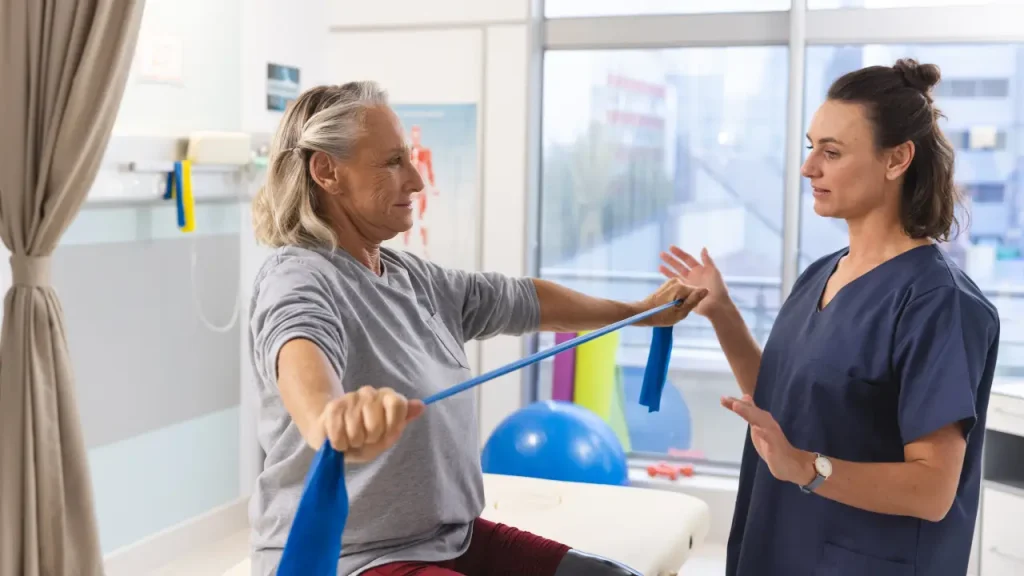
Neuro-Rehabilitation in Mississauga
What Is Neuro-Rehabilitation?
Neuro-Rehabilitation refers to a comprehensive, movement-focused approach aimed at helping individuals manage and recover from conditions affecting the nervous system. These may include injuries, degenerative disorders, or disruptions that impair daily function. This type of care supports those who have experienced strokes, spinal cord injuries, traumatic brain injuries, multiple sclerosis, Parkinson’s disease, and other neurological conditions.
Book a Neuro Rehabilitation assessment →
Unlike conventional therapy, Neuro-Rehabilitation works by encouraging the nervous system to relearn or compensate for lost abilities. It targets mobility, coordination, balance, strength, and cognitive function depending on the condition. Sessions often focus on retraining neural pathways, using movement, sensory integration, and repetitive tasks to encourage functional improvement.
Why Does Neuro-Rehabilitation Matter?
Neurological disorders often disrupt a person’s capacity to move, think, or communicate clearly. These changes may emerge suddenly after a stroke or gradually with progressive conditions. In either scenario, the nervous system requires time, structured support, and specific interventions to respond, adapt, or compensate.
Neuro-Rehabilitation in Mississauga focuses on these needs by offering condition-specific strategies to help clients build or regain function. The aim is not just to address the physical body, but to enhance independence through structured movement, postural retraining, and neuromuscular re-education.
This process acknowledges that each person’s nervous system adapts at a different pace. Therapists adjust techniques based on current presentation, client goals, and observed response to each session. Progress may unfold gradually, but targeted consistency plays a key role in improvement.
Which Conditions Does Neuro-Rehabilitation Address?
Neuro-Rehabilitation in Mississauga supports a wide range of neurological conditions. Some of the more commonly addressed include:
- Stroke recovery: Focuses on motor relearning, balance, coordination, and upper limb function.
- Parkinson’s disease: Emphasizes rhythm, mobility, and posture retraining.
- Multiple sclerosis (MS): Addresses fatigue management, core stability, and joint control.
- Spinal cord injuries: Encourage voluntary control of movement where possible.
- Brain injuries: Target function, gait, and activities of daily living.
- Peripheral nerve injuries: Includes desensitization and proprioceptive training.
These sessions often involve a combination of strengthening, stretching, sensory stimulation, and movement retraining to target specific challenges and encourage neuroplasticity.
How Does Neuro-Rehabilitation Work?
A typical plan starts with a comprehensive assessment. The therapist examines how the nervous system currently influences movement, balance, strength, and function. They may look at mobility patterns, joint alignment, muscle activation, postural awareness, and coordination.
Once the practitioner establishes the goals, treatment focuses on function. For example, someone recovering from a stroke might focus on regaining grip strength or relearning how to step safely. Sessions use progressive movement retraining, tactile feedback, and manual cueing. The therapist carefully introduces repetition and progression to support motor learning.
As progress develops, tasks may become more complex. The focus often shifts toward balance challenges, dynamic movement, or dual-task activities-encouraging the nervous system to respond in real-time. Consistency between sessions and home practice forms a key part of this recovery framework.
What Tools and Techniques Are Used?
While Neuro-Rehabilitation in Mississauga does not rely on a single method, therapists may incorporate a range of strategies tailored to each individual. Some of these include:
- Manual Therapy: To release tight structures, support alignment, and stimulate sensory receptors.
- Joint Mobilizations: To improve mobility in joints impacted by stiffness or disuse.
- Core Stability Training: For those with poor postural control or balance limitations.
- Taping or Bracing: To provide feedback and support to weak or overactive areas.
- Cryotherapy or Heat: To reduce discomfort and prepare tissues for movement.
- Ultrasound or Laser Therapy: Used occasionally to support soft tissue recovery.
- Balance Exercises: Including static and dynamic challenges to retrain sensory pathways.
- Task-Specific Movements: Exercises that simulate real-world functional goals.
Importantly, these tools are selected based on their relevance to the individual’s condition, goals, and stage of recovery. They are not applied uniformly but guided by assessment findings and treatment response.
Adapting to Progress and Setbacks
The path of Neuro-Rehabilitation is rarely linear. Some sessions may bring significant progress, while others may feel stagnant. We expect both outcomes. Therapists consistently monitor and adapt each session based on fatigue, movement patterns, and how the nervous system responds.
Sessions may also include rest periods, mindfulness cues, or visual strategies depending on sensory feedback and motor planning needs. The therapist’s role is to maintain a supportive, structured approach while helping individuals meet their identified movement and function goals.
Working Towards Function and Confidence
Neuro-Rehabilitation in Mississauga is not solely about improving muscle strength or joint range. It is about reclaiming meaningful movement. Each session focuses on achievable and relevant function-whether that involves learning to transfer safely, improving balance on stairs, or walking with better coordination.
With each session, clients are encouraged to develop awareness of their posture, alignment, and movement strategy. Therapists aim to foster a sense of involvement by clearly communicating purpose, adjusting techniques as needed, and setting attainable goals within each session.
Who Can Benefit?
Anyone experiencing difficulty with motor control, postural stability, or sensory feedback due to a neurological cause may benefit from this approach. TClinicians address both acute cases-such as a recent stroke or trauma-and ongoing conditions like Parkinson’s or MS. They do not limit care based on age. The nervous system can learn, adapt, and respond at various life stages when given consistent, structured input.
How Should You Prepare for a Session?
Before starting Neuro-Rehabilitation in Mississauga, the therapist conducts an in-depth intake to understand health history, current presentation, and movement goals. We recommend wearing comfortable clothing to allow movement during sessions. Footwear with good grip and support is preferred, especially when balance retraining is part of the session.
Home exercise guidance is typically part of the care plan. These exercises reflect what was introduced during treatment, offering reinforcement between sessions. They also ensure continuity in recovery and build long-term movement habits.
Take the First Step Forward
Neuro-Rehabilitation requires patience, precision, and consistency. Whether the goal is walking with greater control, improving hand coordination, or regaining independence in basic activities, this approach offers structured movement retraining that targets how the nervous system responds.
Suppose you or someone you care for is managing a neurological condition and looking for focused support. In that case, Neuro-Rehabilitation in Mississauga is available at Rejoice Physiocare. Book an initial assessment to begin the process.
Frequently Asked Questions
Neurological rehabilitation supports people recovering from conditions affecting the brain and nervous system, such as stroke, Parkinson disease, or multiple sclerosis. At Rejoice Physiocare in Mississauga, our physiotherapists use targeted exercise, balance and gait training, and functional retraining to help improve movement, independence, and quality of life.
My father had a stroke last year. Is it too late for rehab?
It is not too late to work on goals. Many people keep improving with regular, targeted practice long after a stroke, although progress varies. A physiotherapist can assess his walking, balance, strength and daily tasks, then build a program he can continue at home.
What does neuro rehabilitation at Rejoice include?
It may include balance and walking training, strength and flexibility work, practising daily tasks such as getting up from a chair or managing stairs, and advice on energy and fatigue. Christelle Saikaly, one of our physiotherapists, has a special interest in neurological rehabilitation.
Can you help with Parkinson's disease or MS?
Yes. Physiotherapy can help people with Parkinson's disease or multiple sclerosis maintain walking, balance and strength and adapt as needs change. Your physiotherapist works alongside your doctor and other health providers.
Can a caregiver or family member come too?
Yes, with the patient's consent. Caregivers often find it useful to learn the exercises and ways to help with walking and transfers at home. The clinic has a wheelchair-accessible entrance, parking and washroom.
Is neuro rehabilitation covered?
It is billed as physiotherapy, so it is usually covered under the physiotherapy benefit of extended health plans. OHIP-funded physiotherapy is available for eligible people only at designated OHIP-funded clinics. Call us and we will explain your options.
Sources and further reading
General health information from independent public and professional sources. It does not replace an assessment with a registered clinician.
- Stroke recovery and support, Heart and Stroke Foundation of Canada
- Recovering from a stroke, NHS
- Stroke, Physiopedia




