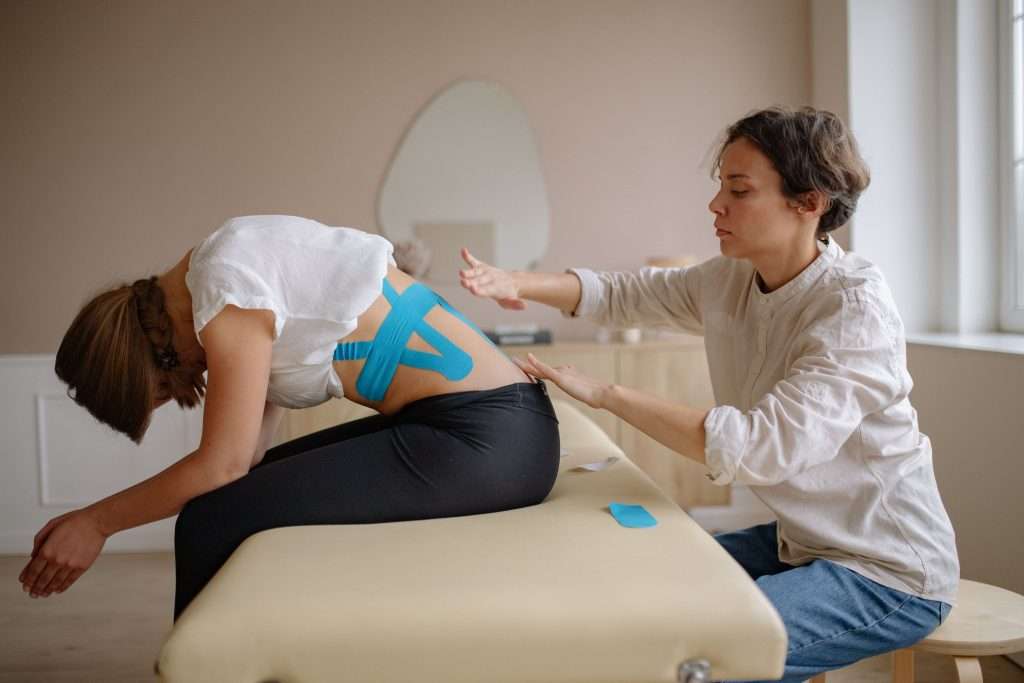
That deep, persistent ache in your glute - the one that flares during your commute and lingers through your workday - deserves more than a generic stretch routine. At Rejoice Physiocare, our evidence-informed physiotherapy approach addresses the interconnected hip, pelvic, and lumbar mechanics associated with your discomfort. We provide structured rehabilitation designed to help you return to sitting, moving, and living with less pain defining your day.
Book your assessment today and take the first step toward restoring balance.
Does This Sound Familiar?
If you have been living with deep gluteal pain that is hard to pinpoint and slow to respond to stretching, you may be dealing with piriformis syndrome. Rather than cataloguing every possible symptom, consider whether these recognizable patterns reflect your own daily experience in Mississauga:
- A deep, burning or aching sensation in one buttock that feels like it originates far beneath the surface - not on the skin or in the joint, but inside the hip
- Pain that intensifies after sitting for 30 or more minutes, such as during a long office workday or a GO Train commute
- Discomfort or a sharp catch when externally rotating your hip - stepping out of a car, crossing your legs, or climbing stairs
- Radiating numbness or tingling down the back of your thigh that stops before reaching the foot
If these resonate, our clinical physiotherapy may offer the structured, restorative approach you need.
How Does Physiotherapy Help With Piriformis Syndrome?
Piriformis syndrome (lumbar) is rarely an isolated muscle problem. The piriformis sits at the intersection of the lumbar spine, pelvis, and hip. Physiotherapy addresses symptoms associated with piriformis syndrome by using manual therapy and progressive exercise to help reduce nerve compression and support mechanical balance across interconnected pelvic systems.
Treatment typically begins with targeted manual therapy and soft tissue release to gently help reduce compression in the deep gluteal structures. This is designed to give the piriformis room to function without placing undue stress on the sciatic nerve. This hands-on work aims to ease the acute tension that makes sitting, stepping, and moving so uncomfortable in the early stages.
From there, our clinicians shift focus to rebuilding muscular balance to help protect those gains. A progressive programme addressing the hip abductors, extensors, and core is designed so that daily movement - long commutes, desk work, recreational exercise - may no longer provoke the same cycle of tightening and discomfort. This systemic approach is what distinguishes clinical physiotherapy from isolated stretching: it works to address the full mechanical system, not just the symptom.
What Should You Expect From Physiotherapy Treatment?
| Phase | What Happens | Typical Timeframe |
| Initial Assessment | A thorough clinical evaluation of your movement patterns and pelvic mechanics, alongside tests that help distinguish piriformis-related presentations from lumbar spine or disc-related issues. Understanding the likely source of your discomfort helps form the foundation of your recovery plan. | First appointment (45-60 minutes) |
| Treatment Sessions | A blend of targeted manual therapy to help release deep gluteal tension, paired with neuromuscular re-education and progressive loading to support strength across your hip and core systems. Sessions evolve as your function safely returns. | Typically 1-2 times weekly |
| Timeline | Many individuals notice a meaningful reduction in acute discomfort within the first 2 to 4 weeks. A more comprehensive restoration of function - including strength, confidence in movement, and reduced likelihood of recurrence - typically spans 6 to 8 weeks. | 4-8 weeks for functional restoration |
These timeframes reflect common clinical patterns rather than absolute certainties. Your physiotherapist will continuously calibrate the programme to your specific presentation and progress throughout your recovery.
Is Physiotherapy Or Medical Treatment Right For Piriformis Syndrome?
When deep gluteal pain persists, most individuals consider several paths. Each has a specific role; understanding these distinctions helps you make an informed healthcare decision.
| Treatment | What It Offers | Key Consideration |
| Physiotherapy | Addresses mechanical contributors - deep gluteal tension, hip imbalance, core weakness - through assessment, manual therapy, and progressive loading. | A non-invasive, often first-line option aimed at supporting function and helping reduce the likelihood of recurrence. |
| Cortisone Injections | May help manage acute nerve inflammation in persistent cases and can create a comfortable window for active rehabilitation to proceed. | Typically focuses on inflammation rather than rebuilding the muscular balance that may help reduce the chance of symptoms returning. |
| Self-Directed Stretching | Can offer temporary relief for many individuals and remains a useful daily tool alongside structured clinical care. | On its own, may not address the underlying hip and core contributors that can sustain the dysfunction. |
| Surgery | Generally reserved for rare cases unresponsive to comprehensive conservative management; typically considered a later intervention. | Often considered only after a thorough conservative rehabilitation programme has been explored, per clinical guidance. |
This comparison is informational only. The most appropriate pathway depends on your individual presentation and requires clinical assessment.
Physiotherapy At Rejoice Physiocare
If piriformis syndrome has been disrupting your daily routine - your commute, your workday, your training - structured physiotherapy offers a pathway toward supporting the balance and function you are looking for. At Rejoice Physiocare, our evidence-based approach to physiotherapy traces how the body’s systems connect. We address not just the piriformis in isolation, but the full chain of hip, pelvic, and lumbar mechanics that may contribute to lasting recovery.
To learn more about how we approach rehabilitation, explore our physiotherapy service at Rejoice Physiocare and see how our clinical, whole-person care can support your return to comfortable movement.
Why Choose Rejoice Physiocare For Piriformis Syndrome
Piriformis syndrome benefits from a clinician who understands how deep gluteal mechanics intersect with the lumbar spine, the pelvis, and the sciatic nerve pathway - not simply a practitioner applying a generic stretching protocol. At Rejoice Physiocare, our approach to this condition reflects deep systemic understanding.
- Clinical experience in helping distinguish deep gluteal pain from lumbar radiculopathy, so your recovery plan can target the likely driver of your discomfort
- Advanced clinical training in targeted manual therapy and myofascial release for the piriformis and surrounding hip structures
- Evidence-informed progressive loading programmes designed to rebuild hip abductor, extensor, and core function - the interconnected systems that support lasting recovery
- Proud registration with the College of Physiotherapists of Ontario, providing the professional accountability and high clinical standards your care deserves
Frequently Asked Questions About Physiotherapy For Piriformis Syndrome
Many individuals begin noticing meaningful symptom reduction within 3 to 5 sessions of consistent care. A structured rehabilitation programme typically spans 4 to 8 weeks, depending on symptom severity. Your physiotherapist will continuously adjust visit frequency as you rebuild strength and work to restore functional balance.
Physiotherapy is often used as a non-invasive, first-line approach focused on supporting your mechanical function. Cortisone injections may help manage acute inflammation in persistent cases; they typically focus on inflammation rather than rebuilding the muscular strength and pelvic balance that may help reduce the chance of symptoms returning. Your care team can help you weigh the options for your situation.
A thorough clinical assessment can help distinguish deep gluteal muscle tension from lumbar spinal nerve root involvement. Using targeted movement, strength, and neurological tests, our practitioners work to understand the likely source of your pain, which helps form the foundation for an individualized recovery plan. A physician can confirm a formal diagnosis where needed.
Isolated stretching often addresses temporary tension in the piriformis without addressing the underlying hip abductor and core weaknesses that can sustain the dysfunction. Clinical physiotherapy aims to identify these biomechanical contributors through a comprehensive assessment and provides a calibrated loading programme designed to support lasting recovery.
Your practitioner will provide guided home exercises tailored to your body’s unique mechanics. Many individuals also modify aggravating daily activities, such as taking frequent movement breaks during prolonged office sitting or long commutes. Consistency with these strategies is important for supporting systemic balance.
Most extended health benefit plans in Ontario cover private physiotherapy services. However, OHIP does not cover private clinic physiotherapy assessments or treatments. We encourage you to contact your insurance provider directly to confirm your specific plan’s coverage limits before booking your initial assessment.
Insurance Coverage For Physiotherapy In Mississauga
Most extended health benefit (EHB) plans in Ontario include coverage for private physiotherapy services. We work with many major insurance providers and offer direct billing where available - contact us to verify coverage for your specific plan. Please note that OHIP does not cover private physiotherapy assessments or treatments, so we encourage confirming your available benefits before your initial appointment.
Serving Mississauga And Surrounding Communities
Rejoice Physiocare is located in Mississauga, Ontario, proudly serving individuals from across the city and neighbouring communities including Streetsville, Port Credit, Erin Mills, Meadowvale, and Cooksville. We also gladly welcome patients from nearby Oakville and Brampton who are seeking structured, evidence-informed physiotherapy care for piriformis syndrome (lumbar) and related mechanical conditions.
Book Your Physiotherapy Appointment
Ready to stop managing discomfort one stretch at a time and work toward the mechanical balance your body needs? Rejoice Physiocare is here to help you move forward with a structured, systemic approach to piriformis syndrome recovery in Mississauga, Ontario.
Book your physiotherapy assessment today - call us or use our online booking system to choose a time.




